01 / JINHSI’S CLUES
Did Jinhsi Intend This Meeting?
In Act I, Baizhi discovers overlapping frequency traces on the purple leaf Jinhsi left for Rover. By the end of Act II, those traces have led Rover and Yangyang to Qichi Village. In Act III, they encounter Scar there.
Scar immediately interprets the meeting as Jinhsi’s doing, suggesting that the Magistrate deliberately brought Rover to him. The route from the leaf to the village is real, but whether Jinhsi intended them to meet is not confirmed.
The encounter gives the earlier token a new significance: it leads not simply to a location affected by Waveworn phenomena, but to a confrontation with someone who already knows of Rover. Whether Jinhsi expected Scar to be there remains open.
02 / COMPETING INTERESTS
Who Wants Rover, and Why?
From the Prologue onward, Rover has attracted unusual attention. Jinhsi publicly anticipates an important visitor; Sanhua recognizes something exceptional in Rover; and an unknown watcher addresses Rover as her “seed of fate.”
Scar now claims that several forces have been competing for Rover and that even the people who first welcomed them understood their value. His familiarity with Rover’s awakening makes his interest significant, but his suggestion that Rover’s companions knew more than they admitted remains his own claim.
Scar’s effort to present himself as the only honest observer is itself a form of persuasion. His claims add to the pattern of people who seem to know more about Rover than Rover does, without establishing that their motives are the same.
03 / POWER & RESPONSIBILITY
The Shepherd and the Black Lamb
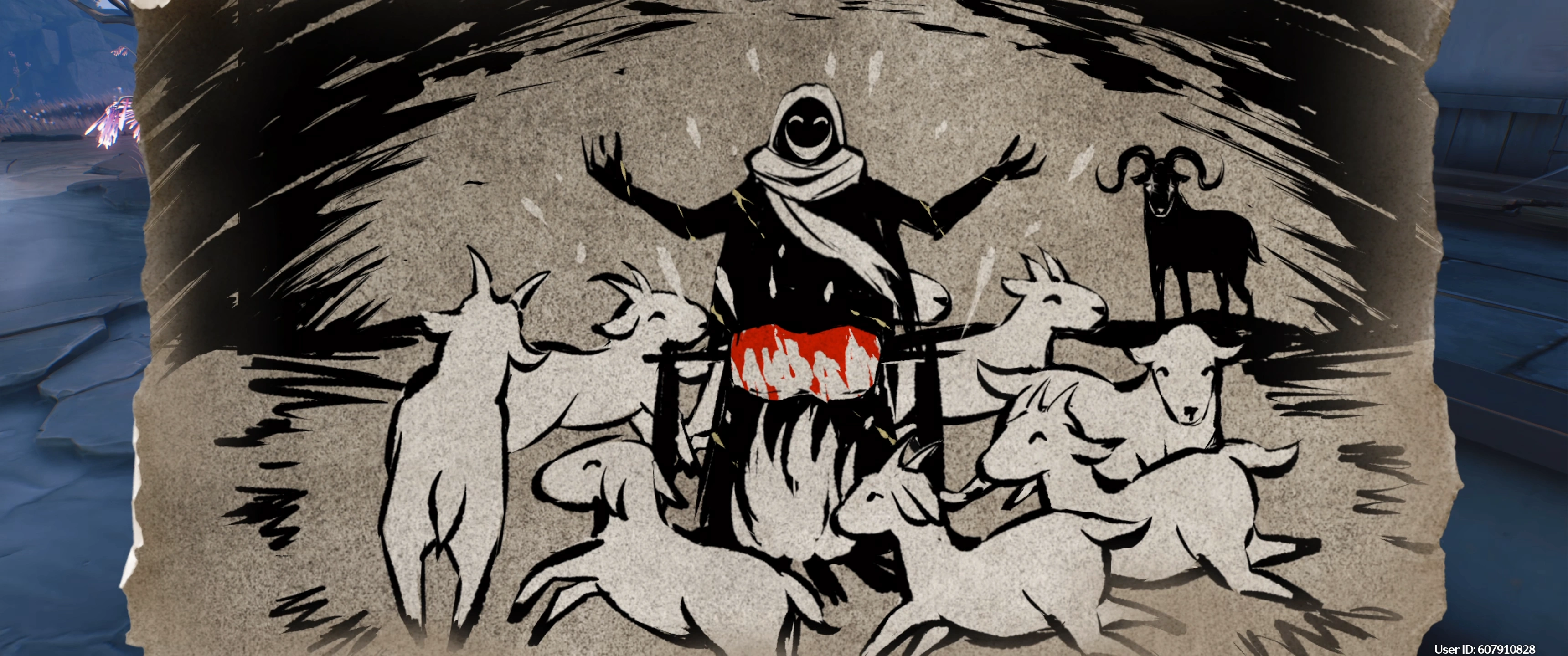
Scar’s fable portrays a shepherd who grants wishes by sacrificing members of his flock. The villagers continue participating despite knowing the risk, then turn on a black lamb who challenges the arrangement.
The tale assigns responsibility both to the shepherd who establishes the system and to those who benefit from it. Scar emphasizes the flock’s complicity and identifies himself and Rover with the black lamb, the figure who refuses to accept the rules.
Yet Scar controls how the story is told and uses it to argue for his own worldview. His interpretation should not be confused with an impartial account of Qichi Village. Rover and Yangyang’s later investigation matters precisely because they seek evidence beyond his narration.
04 / EVIDENCE & INTERPRETATION
What the Diary Reveals
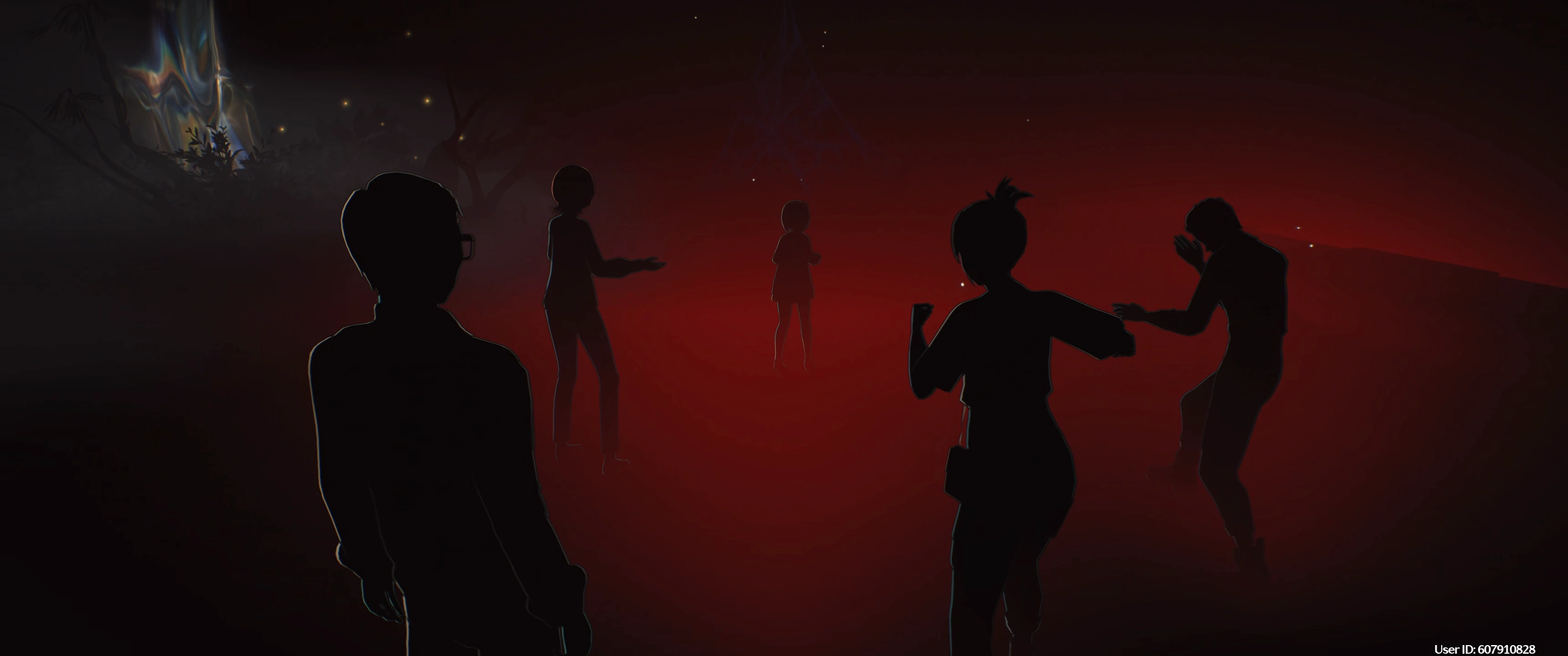
The diary discovered beneath Qichi Village provides a more personal account than Scar’s fable. The girl records that her friend Sissi died protecting her from Tacet Discords. Hoping to restore Sissi, she used her ability to manipulate frequencies and transformed her into a Tacet Discord instead.
The girl writes that her father ordered her to recombine Tacet Discord frequencies and concealed the truth about Sissi. As villagers disappeared and her father brought back more Tacet Discords, she became increasingly frightened and uncertain about the cost of her wish. Her final entry describes villagers surrounding their house and ends with a plea to save the village.
These entries give substance to the suffering behind Scar’s tale, but also complicate its moral simplicity. The girl is neither merely an innocent symbol nor the monster she fears others will see: her actions caused harm, yet the diary shows grief, coercion, uncertainty, and a desire to help. It does not settle everything the villagers knew or the extent of her father’s actions.
05 / UNANSWERED QUESTIONS
The Visitor Who Knew the Fable
In the earliest diary entry, the girl describes a stranger who invites her to call him her brother, says they are of the same kind, and tells her a frightening story about the black lamb. Her father later insists that no such visitor came to the village.
Scar tells Rover a strikingly similar fable, making the earlier encounter especially significant. The resemblance raises the possibility of a connection between Scar and the visitor, but the diary does not identify the man. Nor does it explain the final note, written by someone else: “It seems you are the luckier one.”
The unusual Tacet Discord’s repeated calls for its brother gain another possible meaning in light of this entry. Whether the creature is connected to the diary’s author, whom it is calling, and who wrote the final note remain unresolved.
06 / UNRESOLVED INTENTIONS
The Woman in Red’s Intervention
At the end of Act II, Rover sees a woman in red apparently commanding Tacet Discords during the battlefield vision. In Act III, Phrolova, the mysterious woman in red, interrupts Scar after Yangyang breaks his illusion. The act does not explicitly connect the battlefield vision to this encounter.
Phrolova reminds Scar that she allowed him time alone with Rover on the condition that his improvisations would not trouble others. Scar’s response suggests that she is carefully orchestrating something and resents his interference.
Their exchange reveals that the two are coordinating their actions, though they do not appear to agree on Scar’s methods. Scar ends the encounter while leaving open the possibility of approaching Rover again. What Phrolova is arranging, and how it relates to Rover, is not yet clear.
07 / CHARACTER DEVELOPMENT
Yangyang’s Response to Qichi Village

Yangyang’s sensitivity to the Streams lets her sense the village’s lingering anguish and recognize emotions in a Tacet Discord that behaves unlike an ordinary enemy. Her reaction is not simply curiosity about an unusual phenomenon; she feels compelled to investigate the suffering behind it.
After reading the diary beneath the village, she struggles with the sorrow she senses there. She explains that tragedies like this led her to become an Outrider. She cannot stop the Lament, but wants to help the people affected by it.
Her response contrasts with Scar’s use of the village as an argument. Where Scar seeks to shape Rover’s judgment through the tragedy, Yangyang focuses on understanding what happened and preventing further harm.
CONTINUE EXPLORING